
Home / Climate Projects / OLAMES National Waste-to-Energy Programme
Circular Energy · Ghana
OLAMES National Waste-to-Energy Programme
A Ghana-wide platform that collects unmanaged biomass residues, converts them into specification-grade industrial pellets, and supplies those pellets to industrial boilers and kilns as a substitute for imported fossil fuels and unsustainable wood fuel.
Concept · Feasibility · Development · Financing · Construction · Operational Current stage: Development
The climate problem
Ghanaian industry runs its boilers and kilns largely on heavy fuel oil, LPG, imported pellets and wood fuel. At the same time, large volumes of agricultural and processing residue — coconut husk prominent among them — are openly dumped, burned or left unmanaged because no dependable industrial supply chain exists to collect them.
The solution
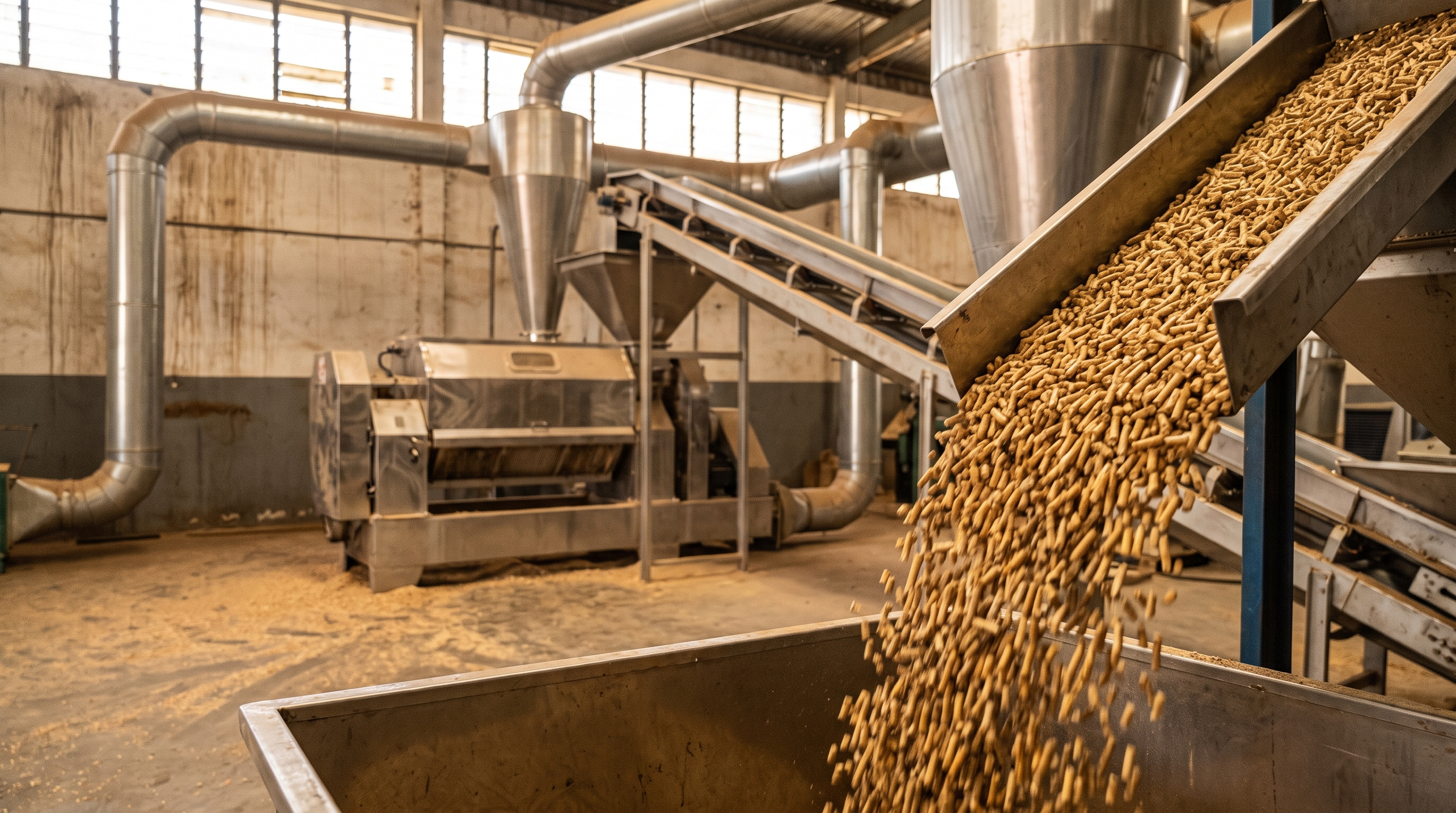
OLAMES is designed as a distributed biomass infrastructure system rather than a set of pellet plants. Material moves from community collection spokes to mega transfer stations for aggregation and initial moisture conditioning, then to standardised production nodes that dry, mill, pelletise and dispatch a specification industrial fuel.
Moisture management is staged deliberately across the chain rather than loaded onto the plant dryer, which lowers thermal duty, raises effective transport payload and improves both throughput and project economics.
Programme figures
- Production nodes at maturity 48
- Pellet output (programme design) 720,000 tpa
- Renewable industrial energy ≈11.66 PJ/yr
- Pellet energy content (target spec) ≈16.2 GJ/t
- Lifetime net ITMOs (modelled) ≈11.2 million tCO₂e
- Total programme investment ≈US$160.4m
- Collection spokes ≈540
- Mega transfer stations 20
- Aggregation-network income earners 5,500+ (projected)
- Direct FTE roles at full deployment ≈3,700 (projected)